Showing posts with label lynne garner. Show all posts

Friday, 1 December 2017

When I submitted my first picture book manuscript I knew nothing about the industry, I just knew I wanted to write picture books. I'd proved I could write non-fiction as I'd had features and non-fiction books published. However picture books was one of those bucket list things, so I decided to give it a go. Not surprisingly I received a lot of rejections and along with some of those rejections I received a little advice from editors (which is uncommon, they simply don't have the time, so their comments were much appreciated). So I decided to study and signed up for a distance writing course. I started to submit my work and although I received positive feedback I also received notes, similar to those I'd received from editors.

So in the spirit of sharing here are the five rules I've drawn up based on the feedback I've received over the years.

Rule one:
Don't write about inanimate objects, especially those that talk. Talking and thinking inanimate objects is old fashioned. Children don't like to be 'talked down' to so they won't believe that inanimate objects can have a life of their own. So talking socks - oh no talking socks would never make a good story.

An epic adventure that starts
in a sock drawer.
Rule two:
Don't write about things considered to be 'adult' topics things like death, disability, bullying etc. So nothing like Gilbert the Great which deals with the lose of a friend - that'd never reach the shelves.  

Gilbert The Great White Shark
loses a friend.

Rule three:
Never ever write about a character that is not cute. Children and adults can't bond with un-cute characters, they want a character that has the arrr! factor.

Trolls aren't cute but I think I got away with it because
this story relies on humour. 

Rule four:

If you want your story to be published then it should have a 'proper' story arch with a beginning, middle and end. One where your character changes, gains or learns something. So a book where you make choices on behalf of the character would never get published.
   
Well it does work and so well that this title has been
followed by another including colouring books.
Rule five:

Your story should always have a happy ending. Leave your reader feeling positive. There's enough sadness in the world, so you don't have to introduce it to young readers in a book.

You'd never think a picture book where one of the main
characters eats the other would work, but it does.  

So now you know the rules guess what? Go on break them! If it worked for these authors then it might work for you. 

Mmmm what rule can I go and break? 

Regards

Lynne

Now for a blatant plug:

Hedgehog of Moon Meadow Farm
Meet the Trickers
Brer Rabbit
Coyote Rales Retold
Anansi the Trickster Spider (Volumes 1 & 2)

Friday, 3 November 2017

My Writing Tips

I look back to when I was an aspiring author, smile and ask myself "how did I ever manage to get published?" Apart from being able to string a few words together I knew nothing about the business of becoming published. Yet somehow I managed to become a published picture book writer. However if I knew then what I know now my journey would have been a shorter one. So to reduce the length of your journey here are my top ten tips for writing a story a commissioning editor will hopefully love.

All about a little mouse missing his best friend

One:

Listen to how children speak, what they talk about, the worries they have etc. All of this can be used to fuel your work and ensure you're writing stories children will enjoy and relate to. 

Two:

If you get the chance to study poetry, even a short workshop, then go for it. A picture book writer can learn a lot from studying poetry and use that knowledge to add that little extra to their stories. 

Three:

When writing be aware of your audience and use appropriate words. Don't use 'grown up' or long words when short will do. 

Four:

Learn from published authors by reading, reading and reading some more. As you read question how the author has constructed the story, how they make you want to turn the pages, how they use words etc. 

Five:

Break down your story into spreads and think of them as scenes in a play. Ask yourself is there something new happening on every page? Have you given the illustrator something to work with? Does the new scene move the story forward? If the answer to any of these is no then you need to have a rethink.

Six:

Get your characters talking as soon as possible. Let them tell the story in their own words. It is there story after all.

Seven:
Focuses on smell in a humorous way  

Try using repetition in your story. Repetition provides a hook, something for your readers to listen out for, to anticipate. Repetition allows them to join in with the story and become part of your characters journey.

Eight:

Try to include the five senses in your descriptions. What does something smell like, feel like, sound like, look like and taste like? This will allow your reader to connect with the action on the page.

Nine:

Everyone loves to laugh, so if appropriate include a little humour. This can be in your use of words, the illustrations or perhaps even both. 

Ten:

Have a go at using the magic number three in your story. Think Goldilocks and The Three Bears, The Three Billy Goats Gruff and The Three Little Pigs.   

I hope these tips help and good luck with your writing. If you're a published author and you have your own tips please do add them to the comments below.   

Lynne

Now for a blatant plug - don't say I didn't warn you:


Hedgehog of Moon Meadow Farm
Meet the Trickers
Brer Rabbit
Coyote Rales Retold
Anansi the Trickster Spider (Volumes 1 & 2)

Friday, 6 October 2017

Apps To Inspire

As a writer and teacher I'm always looking for new ways to fuel my own writing and ways to inspire my students. So earlier this year I decided to discover what writing related apps were available. After some time researching apps for iPhones and Android I downloaded a dozen or so. After much 'playing' I whittled my favourites down to the following three apps.

Story Lines
Screens from 'Story Lines' 
Designed by: Magostech
Free to download from the following:
Amazon click here
iTunes click here

I love using story cubes and regularly use them to exercise my 'writing muscle' and in class to help inspire my students. The physical cubes I use in class come in packs of nine giving you 54 images. However these nine dice have ten images each, therefore offering more combinations.

To use you simply shake your phone or tablet and the dice scatter. You can then drag them into some order and lock the image. The one small issue I've found is if you don't lock the screen sometimes the dice roll so you lose the image the dice landed on for that roll. I've only used the app as a 'guest' however if you sign up you can also use the 'write story' facility.

This is a great app to have on you when you're sitting in that waiting room or on the train and want to exercise your imagination. Also after using a few times in class it's a great one to introduce to your students.


Poetry Creator
Developer: Tiny Mobile Inc.
Free to download with in app purchases

This app is fun, easy to use and really pushes the creative process. Think fridge magnet or rip it poetry. When you open the app you are supplied with a number of words on a 'board' which provides you with the starting point for your poem. These words you simply drag into place to create your poem. If you struggle there is a pull out 'drawer' (found on the right hand side of the screen) which contains additional words that you can pull into play. You can increase the number of words by going into the 'mix-tionary' and  sliding the selectors.

 You can download additional dictionaries (shown as installed on the image on the left) from here or download eight dictionaries for a special price from the menu page.

Once you've written your poem you can upload to Facebook to show off your skills, email to yourself or save to the photo album on your device. Do remember if you don't do any of these before you press the double arrow button (second icon from the right along the bottom of the screen) you lose your poem.

Unfortunately this app is only available for download onto iPhone and iPad - click here if you want to download which means I won't be able to use in class but it's definitely one I'll be adding to my handouts.

Acrostic Poems
Developer: International Reading Association
Free to download from the following:


Definition of an acrostic poem (just in case it's not one you've come across before): Is a type of poem where the first, last or other letters in a line spell out a word or phrase. The most common is where the first letters of each line spell out the word or phrase. 


As with many of the apps I've downloaded over the last couple of months I did so because I wanted to use in my creative writing sessions. So far I've used this one in three sessions. Two were with year 4 and 5 kids whilst the third session was with a group of students who were 60 plus. All three sessions were (thankfully) a success. 

The first screen asks you to enter your name and then the theme/word you wish to use as the basis for your acrostic poem. When you pick your theme you're limited to 14 characters which includes any spaces and it doesn't include a spell checker, so take care as you type. Your next step is to brainstorm ten words that link with your theme.

Once you've completed this step simply start to create your poem using the words generated during your brainstorming session. When you've completed your poem, checked your spelling you can save it, share via email or print it off. If you forget to do any of these and click on 'new poem' you are told that the poem will be lost and you're given the chance to save your work.

Having seen students use this app in class it's another I'll be adding to my handouts when I update them next. It's also given me a few ideas for new stories which are now safely stored in OneNote.

I hope you've found these reviews helpful.

Regards

Lynne

Now for a blatant plug:

Hedgehog of Moon Meadow Farm
Meet the Trickers
Brer Rabbit
Coyote Rales Retold
Anansi the Trickster Spider (Volumes 1 & 2)

Monday, 4 September 2017

Researching To Get It Right

I started writing non-fiction 20 years ago and I continue to write non-fiction magazine features to this day.  I've always strived to write features that are as accurate as possible. Even though I know (I heard it on the TV programme QI, so it must be true) that facts normally have a shelf life of five years. 

This desire to get facts correct crosses over into my picture book and short story writing. I've had many a discussion with editors on getting the 'facts' right. I understand in my picture and short story collections we're dealing with talking animals or creatures that don't exist. However, having studied environmental geography at university I prefer to try to ensure the life science elements of a story are as real as possible. 

For example in my first picture book (A Book For Bramble) Bramble the hedgehog is hibernating under an upturned wheel barrow. This is based on real life. You see in between 'life' stuff I rescue hedgehogs (Herts Hogline) and two carers I work with lost the use of their wheelbarrow to hedgehogs hibernating under them. However I did have to concede to the editors decision that Bramble slept with his family. Typically hedgehogs hibernate on their own. I say typically because we've had  autumn hoglets in our care hibernate late in the season curled up beside their siblings, even though we provided a hibunacula each.

This year I've worked on two books that feature a hedgehog as the main character. The first was a picture called 'Harveys Big Sleep' written as co-author with hypnotist Chris Caress. The second book (Hedgehog of Moon Meadow Farm) is a collection of re-told short stories obviously staring a hedgehog. It was important to me that although I was dealing with talking animals that I kept the stories as natural as possible and that the facts were correct. So in both books I have Harvey and Hedgehog eating the right food, only rambling at night and living on their own. 

I'm now working on a follow on collection of short stories (Fox of Moon Meadow Farm) that stars a Fox. As with my previous books it's important to me to keep to the facts as much as I can. So because I don't know anywhere near as much about our other wildlife (foxes, badgers, starlings etc.) I've had the pleasure in having to do some research (it's the geek in me, I love a bit of research). So I've researched a range of things including:

  • What times foxes are most active
  • When they have their cubs and what calls they make 
  • When leatherjackets (crane fly) are in season
  • How wild animals deal with parasites, mainly fleas
  • What starlings eat and their natural behaviour
  • When damson fruit come into season

Armed with this research I'm now working up the roughed out stories and I'm hoping by this time next month I'll have the first draft completed. As I've been writing this post I've been asking myself if I'm the only one who likes to keep to the facts or is that just 'so yesterday?' What with fake news appearing to be the thing to write at the moment.

So what do you prefer to write or read fact or fake?    

Lynne 

Now for a blatant plug:

Hedgehog of Moon Meadow Farm
Meet the Trickers
Brer Rabbit
Coyote Rales Retold
Anansi the Trickster Spider (Volumes 1 & 2)

Wednesday, 2 August 2017

Researching online

In my last post 'I used to go to the library' I shared a few online libraries that enabled me to research for my latest book ‘Hedgehog of Moon Meadow Farm’ without visiting a physical library. This time I wanted to share aa few more I've used and found really helpful.  


Encyclopedia Mythica (thank you for the suggestion Fran B) holds 7,000 plus articles. It contains a mythology sections that is divided into six geographical regions. These being Africa, Americas, Asia, Europe, Middle East and Oceania. I’ve already bookmarked their folktales section. 


Scribd. has built a library of books, audiobooks, documents, magazines and sheet music. At the time of writing this they were running a read free for 30 days special. Unfortunately, I couldn’t track down how much the charge is once that 30 days expires but I understand it’s a “single small payment.”  


Academia.edu is a platform for academics to share research papers. It claims to be the easier way to share papers with millions of people across the wold for fee. To use you must caret an account but once you do you have access to over 18 million papers. 


LibriVox has the mission statement of “to make all books in the public domain available, for free, in audio format on the internet.” This site is a non-commercial, non-profit and is run by volunteers. The volunteers record public domain books (mostly sourced from the Project Gutenberg and the Internet Archive) and makes them available to download free. They are always in need of volunteers to read and record books in all languages.


Google Books is a searchable data base of books in print and in the public domain. A good starting point for any research. You can search by term, title or author. When clicking on the link for a book it will tell you if a book is available in eBook format and supply links to places you can purchase the physical format of the book.

Enjoy that research. 
  
Regards

A collection of 8 traditional stories retold
Lynne

Now for a blatant plug:

My latest collection of short stories featuring my favourite animal the hedgehog is available on Amazon in eBook format and as a paperback.

Hedgehog of Moon Meadow Farm


Saturday, 8 July 2017

I used to go to the library

I've recently been enjoying carrying out a lot of research for a non-fiction work. Now once upon a time I used to go to the library to do my research. Searching shelves for those elusive books and ordering books from other libraries. That's no longer the case. Over the last few weeks I haven't left my desk but have visited libraries all over the world and found everything I've needed. So in the spirit of sharing I've decided to share my top five online digital libraries. They are in no particular order:


This easy to use online library contains primary and secondary sources for the study of ancient Greece and Rome. Perseus is a non-profit located in the Department of the Classic, Tufts University - Medford, Massachusetts.

This non-profit library contains millions of free books, movies, software, music, website and more. It is easy to use and to support the great work it does just click on the present icon near the top right hand corner.


A fantastic resource which is provided by the HathiTrust in partnership with a huge number of academic and research institutions. If you're unsure about fair use of anything on the site click here to find out how you can ensure you don't infringe copyright.

Gutenberg Project


A huge library of free ebooks containing a wealth of knowledge. It's easy to use and many of the books I found on there are now part of my Kindle library. If you'd like to support them there is an orange 'donate' button in the left hand side bar.
  

Forgotten Books


Unlike those I've previously mentioned this is not free. They're a London-based publisher who specialises in the restoration of old books. For £5.99 per month you can have full access to over 600,000 books (read online or download). If you love the book you can purchase a printed version, which I've done and been pleased with the quality.

Note:
When using such libraries be aware some of the content may not be in the public domain, so always check and if needed ensure you mention where the information was obtained from.

If you've discovered any other online libraries please share below and if enough are suggested I thank you now, as I'll use for my next blog post.  

Regards

Lynne

Now for a blatant plug:

My latest short story collection Coyote Tales Retold is available on Amazon in ebook format. Also available Meet The Tricksters a collection of 18 short stories featuring Anansi the Trickster Spider, Brer Rabbit and Coyote is available as a paper back and an ebook.    

Saturday, 24 June 2017

My Love of Hedgehogs

A book about the friendship between a
mouse and a hedgehog
If you're a long-term follower of The Picture Book Den then you'll know I love hedgehogs. So much so that I've been rescuing them (on a very small scale from a 6' x 8' shed in my back garden) for the last 25 years (Herts Hogline). They're so much a part of my life that they even creep into my writing. In fact my first picture book 'A Book For Bramble' was inspired by them. I've also written a great many non-fiction magazine features about hedgehogs and this year they star in my latest collect of 8 retold traditional tales (Hedgehog of Moon Meadow Farm) and my latest picture book written as co-author with hypnotist Chris Caress called 'Harvey's Big Sleep.' 
  
A picture booked aimed at helping
children to sleep


As I write this post and if you're reading this within a couple of weeks of my pressing the publish button, I'm hand rearing six hoglets. So rather than tell you something about picture books I've decided to do something a little different. I'm going to turn you all into hedgehog geeks, so you'll know exactly what to do to help our dwindling hedgehog population. Quick fact: hedgehog numbers in the 1950s-60s were an estimated 30 million. Today that has plummeted to 1 million (a faster loss than the loss of the world's tigers). So here are a few ways you can help our hogs:


Just a few days old. For scale
that's a fifty pence under one of them.    
  • If you have a pond with steep sides then fit a ramp.
  • Keep netting at least 15cm (6") off the ground.
  • Leave out food and water. This can be special hedgehog food, tinned cat/dog food (non-fishy flavours) but NEVER bread and milk. To avoid cats eating the food buy or make a feeding station.
  • Always check under hedges and in long grass before cutting.
  • Pick up elastic bands or hair bands, cut up and put into a bin. These and prickles don't mix well.
  • To avoid hedgehogs making a nest in your shed/garage, stable or tack room keep the door closed at all times.
  • Do not use slug pellets; find safer alternatives.
  • Always check a bonfire before you light it.
  • Provide shelter by buying or making a hog home
  • Hedgehogs out during the day are highly likely to need medical help a.s.a.p. so contact British Hedgehog Preservation Society for advice.
  • Never treat for fleas; pet flea solutions are lethal to hedgehogs.
  • During autumn and winter small hedgehogs (under 600 grams) are too small to hibernate, so need to be rescued.
As this is the height of the breeding season the BHPS provide the following advice on nesting females and hoglets:

If you accidentally disturb a nest, try to restore it quickly and without too much fuss.  Check with a piece of screwed up piece of paper to see whether mum is returning, they all react differently, some move the babies over several days, a few have been known to kill them whilst others just abandon them.  If the nest is in a place where it cannot be left, catch the mother before the babies as she will be the most mobile.  Place her in high-sided box with some of the bedding from the nest and then slip her babies in with her.  Contact the BHPS to find a local contact who can advise and if necessary take in the family.  Do not release them somewhere yourself as the mum is very likely to abandon them, given the amount of disturbance she has endured.

First taste of puppy food
Last but not least if you're concerned about your local visiting hedgehog, need advice or find an orphaned, sick or injured hedgehog, contact the BHPS (01584 890801)  they can give general advice and perhaps details of a local hedgehog rehabilitator that you can contact.

If you've reached this far, thanks for reading and please do share this far and wide. Hedgehogs need as many friends as they can get.

Regards

Lynne

Now for a blatant plug:

My latest collection of short stories featuring Hedgehog is available on Amazon in eBook format and as a paperback.


Hedgehog of Moon Meadow Farm


Tuesday, 20 October 2015

At Last My New Book - Coyote Tales Retold

I don't normally plug a book but that's exactly what I'm doing today. The reason is I've been working on this book for over a year and it's just so nice to see it up and selling on Amazon. It features a traditonal trickster character, Coyote. Unlike my picture books 'Coyote Tales Retold' is aimed at the older reader and at the moment is only available as an ebook. However you don't have to have an ereader (Kindle) to read it. By simply downloading a free app (the link for this app can be found on the right hand side of this page) you can still download and read on your PC or Mac.

The book contains eight retold traditional Coyote tales which have been enjoyed for generations by the first peoples of America. Whilst researching these stories I discovered that it was traditional to enjoy them during the winter months only, hence its release in October.

The book contains the following stories:

  • Coyote, Bear and the Four Seasons
  • Coyote Places the Stars
  • Coyote, the Dancing Mice and the Old Elk Skull
  • Coyote, Mouse and Elk
  • Coyote Helps Mouse Fool Owl
  • Coyote, Fox and the Fishing Hole
  • Coyote and Turtle Outwit Beaver
  • Coyote and the Stranger
To purchase from the UK Amazon site click here
To purchase from the US Amazon site click here.

I hope you enjoy!

Lynne    

Friday, 28 August 2015

Book Authors Resale Rights (BARR)

I recently stumbled across an old news piece (16/06/14) released by the ALCS (Authors Licensing and Collecting Society) stating they had teamed up with Book Barn International (a second hand book seller) were launching a pilot scheme that would compensate authors when a second-hand version of their book was sold. This system is known as the Book Authors Resale Rights (BARR) and basically pays a small percentage of the sale price to the original author.

At present authors receive nothing on the resale of their book even if the book is still in print, which obviously means they're losing income from sales of their books when sold new. This collaboration between the ALCS and BBI will mean authors will receive an income from second-hand books sales alongside their regular payments from the ALCS.

I must admit it has always been a niggle of mine that under certain circumstances film makers earn when their film is watched, actors receive repeat fees, composers and musicians earn when their work is sold. Yet the hundreds of thousands of second-hand books sold each year earn the writer nothing, even though the copyright on these books is often still owned by the author. 
  
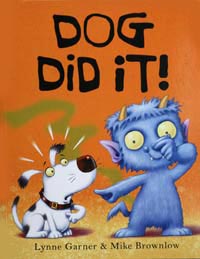
Out of curiosity I visited Amazon to see how many second-hand copies of my last two picture books were available. I discover there were 5 paperback copies and 4 hardback copies of Dog Did It  for sale and 7 paperbacks and 1 hardback of Bad Manners Benjie for sale. I know we’re not talking huge numbers here. However many authors including myself have seen income drop by 29% since 2005. It is also a stark reality that only “a handful of highly successful authors make a very good living; for the majority, earning from writing falls well below subsistence levels" and nearly 90% of writers now need to earn money from other sources other than writing. Unfortunately I’m one of those 90% so every penny earned from the sale of my books really does count.


In a recent update (30/07/15) William Prior, founder of Book Barn International states "I have tried to persuade Book Barn International’s competitors to adopt BARR. They all tell me they see the justice and point of the scheme, but either their accountants or their commerciality won’t sanction it." Come on folks without us you wouldn't have a product to sell and without our small slice of the pie many of us may have to give up writing in a bid to find an alternate way of making a living. 

To round off this post I urge everyone to source (when ever possible) their second-hand books from Book Barn International and show your support for the BARR system. Also if you have any family or friends who have sway with any second-hand book sellers support the cause and have a chat with them, see if you can talk them into putting 'justice' before profit.   

Last but not least I'd like to thank William Prior for his continued fight on our behalf.     

Lynne Garner

Monday, 20 April 2015

Mixing Story Sacks With Picture Books

We all know (I hope) that reading stories is an invaluable experience for young children. It helps them develop a wide range of important skills including developing their listening and communication skills. But many people seem to stop there with picture books but introduce a story sack to the equation and the learning opportunities expand hugely. A story sack offers opportunities for active, involved, cross-curricular learning. They help bring stories to life and offers practical ideas that support the differing interests and learning styles of young children.
So what is a story sack? 
It's a large cloth bag containing a picture book with supporting materials that stimulate language activities and make reading a memorable and enjoyable experience.
How do you make a story sack? 
Simply find a cloth bag to serve as the sack (even an old pillow case will do) and fill with some or all of the following materials (remember to keep appropriate for the needs and abilities of your child).
  • A copy of the book
  • A CD or DVD of the story, if you can find one (link below to my first picture book A Book For Bramble
  • Related non-fiction books e.g. for my book A Book For Bramble you could explore the life of mice and the other creatures that appear in it - rabbits, squirrels, owls and various bugs etc.
  • Models of characters (soft toys are ideal) and objects from the story for example from my book The Best Jumper you could include (for older children) chunky child friendly knitting needles and wool
  • Activities or games relating to the story - often renaming a favourite traditional game will help you achieve this for example a noughts and crosses game can be easily changed if you use images of the characters as counters
  • Themed art and craft items - Pinterest can you your friend here
  • Linked activity cards - see below
Activity cardsAn activity card lists ideas for things to do based on the book, this could include questions, for example using my book Bad Manners, Benjie! you could ask:
  • What was your favourite bit?
  • What bad manners did Boris have?
  • What good manners did Benjie have?
Or why not write a single activity on a piece of paper, fold it up and place in a jar or small cloth bag. Mix the ideas up then encourage your child to close their eyes, pick one, unfold the paper and read what the activity is. Then complete the task or activity it suggests. Your child can suggest these ideas or you could create your own as a surprise. Activities could include:
  • Enjoy a themed crafting session
  • Make up a song or poem based on something that happens in the story
  • Enjoy the same activity the character did in the story for example go to the park just like Boris, Benjie and Dog did in Bad Manners, Benjie!
I hope you can see what fun you can have with a story sack and this post has given you a few ideas. If you have a few ideas I've not included above please do share.

Tuesday, 10 February 2015

A Few Blogging Tips

I teach a number of writing courses that encourage students to earn money from their writing. As part of their marketing campaign I always suggest that writing a blog can be a good option. The reasons I give are the very reasons I blog. They include:

  • It provides you with the opportunity to exercise your writing ‘muscle’
  • Blogging doesn’t cost you anything apart from time – so can be a cost effective marketing tool
  • It allows you to create your USP by proving you know your subject – great if you want to impress an editor
  • It enables you to reach a worldwide audience and market yourself and your work, even when you're asleep

Now when blogging there are things you should do and things you shouldn’t. What follows are a few tips that will hopefully help you create a blog people will want to visit plus a few tips on blogging etiquette.

What you should do when blogging:


One:

Don’t just use it to sell, sell, sell. Write something of interest; create a blog that is useful and provides information, just as I’m hopefully doing with these tips. However remember a blog can be used as a marketing tool and include a link here and there. Be honest you don’t get anything for nothing. As a reader I’m more than happy to gain from someone’s knowledge with the only cost to me being the odd link here and there (which I don't have to follow if I don't want to).  


Two:

Include images of anything related to the blog content, you or your work. It makes the page look more enticing and allows you to ‘hide’ a little advert - hence the picture of my latest book – see point one.


Three:

Don’t moan about your in-grown toenail, how bad your day has been or what you plan to have to lunch, people don’t care. I refer you back to point one, so write something of interest or of use. 


Four:

Ensure you proofread and edit, make the work the best you make it. This will prove you care about your work and hopefully encourage an editor to contact you and offer that book contract you’re looking for. As someone who is an Indie publisher it also proves to possible readers of my work that I can string a sentence together.   

What you shouldn't do when blogging:


One:

Use it as a tool to send spam. 


Two:

Steal someone’s copyright (words and or images). You’d be annoyed if it were to happen to you.    


Three:

Don’t be rude, cruel, incite hatred, say anything that can be considered libellous, encourage someone to break the law or say something you know is untrue. It damages your reputation, will lose you readers and may lose you work. This also goes if you're leaving comments on a blog post. What you write reflects on you and once your reputation is damaged it can take a long time (if ever) to repair that damage.      


Four:

Don’t share information that is personal to you or anyone else.


Five:

Don't claim to have done something you haven't or be something you’re not. There will be at least one person who will know you're stretching the truth and will let the world know. As with point three it will simply damage your reputation and people remember.  

Although writing a blog may not directly earn you money you may find you get commissions based upon your on-line presence. I know a couple of my writing friends have and I gained a commission from a US magazine from one of my crafting themed posts. 

I hope you’ve learned a little from this post and I’d love to know why you blog.

Lynne 

As I’ve mentioned I teach a few writing courses I thought just in case anyone was interested I'd included links to three of my courses that start on the 7th March 2015:


See what I did there? 

Monday, 8 September 2014

My seven tips for marketing your ebook

In a blog post I wrote for Authors Electric last month (Retelling Tales - It's Been Done Before) I hinted at my latest book. This month I'm pleased to announce my latest ebook featuring the rogue that is Brer Rabbit is now available for download from Amazon (UK - USA). The book contains eight retold tales all based on the original tales collected and retold by Joel Chandler Harris.

You may be wondering why I'm telling you this. Well using my monthly slot on Authors Electric was one of the ideas I had to help me market my new book. I also had other ideas and wanted to share them with you (so I wasn't just marketing at you). So here they are:

One:
I've placed a blatant plug on my personal Facebook page and my author Facebook page.

Two:
I've decided to give Wattpad a go. If you've not heard of it basically it's a library you upload your work on to and people can download and read for free.  Some people choose to place entire books on there, a chapter at a time. Some like myself upload part of their work (in my case just one of my short stories) in the hopes someone enjoys their work so much that they are then willing to pay to read further work. I have no idea if it'll work but I'm happy to give it a go. In the first 24 hours my Brer Rabbit story was read by six people. I've also uploaded a story from my Anansi the Trickster Spider collection so I can see if the sales increase -  I'll let you know in a few months if Wattpad appears to pays off.

Three:
I've let the 449 people on my LinkedIn network know my book is now available to purchase. I also intend to let a few of the groups I'm a member of know about my new book. One of the groups has 3,774 members - so a quick mention can't hurt.

Four:
As you can see I've also blogged here and intend on blogging on my website and post on our company website (all my ebooks are written under the banner of Mad Moment Media).

Five:
I read somewhere that Pinterest has 70 million users, with 80% of those being women and apparently 70% of Pinterest members using the site as inspiration for their next purchase. So I'm going to create a Brer Rabbit themed board which will hopefully raise the profile of my ebook and even create a sale or two.

Six:
I've added the book to my author page on Goodreads. I'll be honest I've done very little with Goodreads, so over the next couple of months I'm going to learn as much about it as I can and try to discover if it can be used as a marketing tool. If you have a Goodreads author account and also wish to experiment then here is their official link that provides information on how you can use it to market yourself and book.

Seven:
Last but not least I'm going to create a 'proper' email signature. It's something I've never done (I've just been lazy) but I send 100s of emails per month. Apparently it shouldn't take long and I never know it may lead to a sale or two.

If you have any other ideas about marketing then I'd love to hear them, so please do share.

Regards

Lynne
P.S. If you fancy reading a Brer Rabbit story or an Anansi the Trickster Spider story then just follow the links.