Showing posts with label writing for children. Show all posts

Friday, 3 November 2017

My Writing Tips

I look back to when I was an aspiring author, smile and ask myself "how did I ever manage to get published?" Apart from being able to string a few words together I knew nothing about the business of becoming published. Yet somehow I managed to become a published picture book writer. However if I knew then what I know now my journey would have been a shorter one. So to reduce the length of your journey here are my top ten tips for writing a story a commissioning editor will hopefully love.

All about a little mouse missing his best friend

One:

Listen to how children speak, what they talk about, the worries they have etc. All of this can be used to fuel your work and ensure you're writing stories children will enjoy and relate to. 

Two:

If you get the chance to study poetry, even a short workshop, then go for it. A picture book writer can learn a lot from studying poetry and use that knowledge to add that little extra to their stories. 

Three:

When writing be aware of your audience and use appropriate words. Don't use 'grown up' or long words when short will do. 

Four:

Learn from published authors by reading, reading and reading some more. As you read question how the author has constructed the story, how they make you want to turn the pages, how they use words etc. 

Five:

Break down your story into spreads and think of them as scenes in a play. Ask yourself is there something new happening on every page? Have you given the illustrator something to work with? Does the new scene move the story forward? If the answer to any of these is no then you need to have a rethink.

Six:

Get your characters talking as soon as possible. Let them tell the story in their own words. It is there story after all.

Seven:
Focuses on smell in a humorous way  

Try using repetition in your story. Repetition provides a hook, something for your readers to listen out for, to anticipate. Repetition allows them to join in with the story and become part of your characters journey.

Eight:

Try to include the five senses in your descriptions. What does something smell like, feel like, sound like, look like and taste like? This will allow your reader to connect with the action on the page.

Nine:

Everyone loves to laugh, so if appropriate include a little humour. This can be in your use of words, the illustrations or perhaps even both. 

Ten:

Have a go at using the magic number three in your story. Think Goldilocks and The Three Bears, The Three Billy Goats Gruff and The Three Little Pigs.   

I hope these tips help and good luck with your writing. If you're a published author and you have your own tips please do add them to the comments below.   

Lynne

Now for a blatant plug - don't say I didn't warn you:


Hedgehog of Moon Meadow Farm
Meet the Trickers
Brer Rabbit
Coyote Rales Retold
Anansi the Trickster Spider (Volumes 1 & 2)

Friday, 28 August 2015

Book Authors Resale Rights (BARR)

I recently stumbled across an old news piece (16/06/14) released by the ALCS (Authors Licensing and Collecting Society) stating they had teamed up with Book Barn International (a second hand book seller) were launching a pilot scheme that would compensate authors when a second-hand version of their book was sold. This system is known as the Book Authors Resale Rights (BARR) and basically pays a small percentage of the sale price to the original author.

At present authors receive nothing on the resale of their book even if the book is still in print, which obviously means they're losing income from sales of their books when sold new. This collaboration between the ALCS and BBI will mean authors will receive an income from second-hand books sales alongside their regular payments from the ALCS.

I must admit it has always been a niggle of mine that under certain circumstances film makers earn when their film is watched, actors receive repeat fees, composers and musicians earn when their work is sold. Yet the hundreds of thousands of second-hand books sold each year earn the writer nothing, even though the copyright on these books is often still owned by the author. 
  
Out of curiosity I visited Amazon to see how many second-hand copies of my last two picture books were available. I discover there were 5 paperback copies and 4 hardback copies of Dog Did It  for sale and 7 paperbacks and 1 hardback of Bad Manners Benjie for sale. I know we’re not talking huge numbers here. However many authors including myself have seen income drop by 29% since 2005. It is also a stark reality that only “a handful of highly successful authors make a very good living; for the majority, earning from writing falls well below subsistence levels" and nearly 90% of writers now need to earn money from other sources other than writing. Unfortunately I’m one of those 90% so every penny earned from the sale of my books really does count.


In a recent update (30/07/15) William Prior, founder of Book Barn International states "I have tried to persuade Book Barn International’s competitors to adopt BARR. They all tell me they see the justice and point of the scheme, but either their accountants or their commerciality won’t sanction it." Come on folks without us you wouldn't have a product to sell and without our small slice of the pie many of us may have to give up writing in a bid to find an alternate way of making a living. 

To round off this post I urge everyone to source (when ever possible) their second-hand books from Book Barn International and show your support for the BARR system. Also if you have any family or friends who have sway with any second-hand book sellers support the cause and have a chat with them, see if you can talk them into putting 'justice' before profit.   

Last but not least I'd like to thank William Prior for his continued fight on our behalf.     

Lynne Garner

Monday, 9 June 2014

How Teaching Is Helping My Writing

The few days ago I was talking to a friend who has just started a new job, which she's loving. She'd come to the conclusion that in her previous job she reached a dead end, hence the move. Once we'd talked about her new job she asked me how my writing was going. "I just don't have time," was my reply.

She was surprised and asked me why. So I explained that at the moment I'm teaching so many writing courses that I only  have time to scribble ideas in my note books. She then asked if I felt my old 'job' of writing had reached a dead end. After thinking for a moment I realised that teaching is an extension to my writing. I love to teach new writers the tricks I use and they often teach me a few new tricks. I also realised that although I'm not writing the teaching provides me with the opportunity to bounce ideas off of people I would never normally come into contact with. So my teaching is laying down the fuel for the writing I will do during the periods I don't teach, namely the holidays.

So rather than my writing reaching a dead end I feel a little time away from it is giving me the chance to build on my library of ideas, which I can then use to fuel my writing when I return to it.

So my advice is if you feel you've reached a dead end with your writing take time away from it and refresh your writing battery. It's working for me.

Regards

Lynne

P.S. If you want to hone your writing skills check out my on-line writing courses (and the others) run by Women On Writing:
How To Write A Children's Picture Book And Get Published
Five Picture Books In Five Weeks
How To Write A Hobby-Based How To Book


Sunday, 16 February 2014

Picture Books Aren't Just For Kids


When working on a new picture book I'm not just writing it for children, I'm writing it for a list of people. This list consists of:
  • Commissioning editor
  • Marketing department
  • Bookseller
  • Purchaser

That is a lot of people to get my book passed before it lands in front of the eyes of a child. I therefore have to ensure my story fulfils the criteria each one of the above has. I therefore  have to consider many different things as I work on a new title. These are: 
 
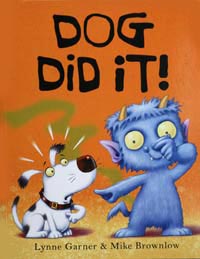
For the commissioning editor I have to try and produce a story that is often character led. So I need a strong character that has to overcome a conflict or one that 'grows.' This means I have to have a plot with a strong start, an interesting middle and a satisfying end. Editors often like a lesson to be learnt, even if this is subtle as in my picture book 'Dog Did It' where the message is not to blame others for your own actions.

The marketing department are looking for a book that can be sold globally and will sell year round. This is why some publishers prefer animals as main characters because they can cross most borders. The marketing department also wants a book that will sell well to a parent or grandparent but also someone buying for an institution such as a school or library. Lastly they want a book that has something they can use to help sell the title for example it has a clever twist to the ending as in 'Tadpoles Promise' written by Jeanne Willis and illustrated by Tony Ross.  

A bookseller has similar needs to the marketing department. They want a book they can place on their shelves and sell itself. This is why humour often works well. If the adult who picks up the book smiles as they are reading it they are more likely to buy it. A bookseller not only needs a book that looks good but also one a child will want read to them time and again. 

Although a picture book is aimed a children it is an adult who purchases it. They are not just looking for value for money but also something they won't mind reading 10, 20, 30 or more times.

So next time you pick up a picture book remember it's been written with you in mind, not just the child you'll be reading it to. 


P.S.
I have three new distance learning courses commencing soon via Women On Writing:

Monday, 6 January 2014

A Picture Is Worth A Thousand Words

A friend recently posted a cute animal photo on my Facebook page. As soon as I saw it I just knew I had to use it as a basis for a picture book story. So I grabbed a sheet of A4 paper and divided into 12 sections (I tend to write the traditional 12 double page spreads). I started to plot my story, which started well. However when I reached the last page I stalled. I had the image in my minds eye, I knew what action was taking place but I just couldn't put it into words. I decided to put the story to one side and allow my subconscious solve the issue for me. However a week or so went by and I was still stuck. Suddenly it hit me. The page didn't need words, the picture could show the reader what I wanted them to know.

I'm not the only author to let the picture tell the story. In the hands of the right illustrator the story can be told successfully without a single word on the page. For example in one of my favourite pictures books The Big Bad Mole's Coming! written by Martin Waddell and illustrated by John Bendall-Brunello there are two pages that contain no words (part of one page below). The action needs no words, I can tell exactly how the animals are feeling from their body language.


Another book that uses this device is Knight Time written by Jane Clarke and illustrated by Jane Massey. The page is a fold out page which opens to reveal a second page with text. Jane informs me the idea was that as the reader turned the page they would feel they were entering the forest where Little Knight and Little Dragon are lost. As you can see from the page below you don't need words to feel the tingle run up your spine and to start to worry about the main characters.


So to all those picture book writers out there. If you're working on a new picture book story and stall ask yourself "can a picture paint the words I need?" If the answer is yes then don't be afraid to allow the illustrations to tell the story for you.

Lynne Garner
www.lynnegarner.com

I have the following online classes with WOW starting soon:

Monday, 1 July 2013

Plotting a Picture Book


It doesn’t matter if you're writing a 70,000-word novel or a 600-word picture book, creating an interesting story is simply a task of asking yourself some questions. Perhaps the most helpful source for what to ask yourself was penned by Rudyard Kipling (30th December 1865 – 18th January 1936),

“I keep six honest serving-men
(They taught me all I knew);
Their names are What and Why and When
And How and Where and Who.”

The four lines above have helped me on many an occasion to solve plotting issues. So what follows is how I use the above to help me construct a story.

Who?
The who is obviously your main character or characters. Unlike adult fiction keep your character numbers small. So it is easier for a child to follow the story.


What?

For a picture book writer there are two what’s to think about. Firstly what is your character? Are they animal, human, mythical create (fairy, wizard, witch etc.) or inanimate object. However many will tell you to keep away from these. Yet Disney still appears to create characters from cars, toys, gnomes etc. that children love. The second what is what happen or perhaps what is your theme? For example the theme for my story ‘A Book For Bramble’ is loneliness and missing a friend. 

Why?
Why is linked into the what, so you ask yourself what happens and why. For example in my book ‘The Best Jumper’ the what happens is my character Spindle the mouse has a jumper that appears to be shrinking however the why it is shrinking is because he is growing, something all children will be able to relate to.

When?
In picture book this is perhaps one of the less important questions. Novels for any age tend to be anchored in a time period. However many picture books are timeless. That is to say when reading them they could be set in any time period. A book about fairies inhabiting a different world could be now or it could be 100 years ago, there is no real relation to ‘our’ time.

Where?
Many picture books are set within their own world as in my book ‘Dog Did It’ which is a mythical world populated by trolls or in a world that sits along side our own. For example in my book ‘A Book For Bramble’ the place it is taking place could be almost anywhere in the world where a mouse lives in a hole under a hedge. As the author I see Teasel and his family living in the English countryside however he would be just at home in many countries in Europe or even in some parts of the US.

How?
This is quite a big question. However I normally use it to answer the question of how my character overcomes the problem I have given them to resolve. If you are a reader of picture books (something I would urge you to do as often as you can) you will notice the how to overcome the problem is not just used once but at least three times to give layers to your plotting.

I’m hoping you can now see how you can use these questions to help you plot your story and create one children will love and adult will be willing to read time and time again.   


I also write for: Electric AuthorsThe Hedgehog Shed and The Picture Book Den

P.S.
I have three new distance learning courses commencing soon via Women On Writing:

Friday, 24 May 2013

Using Your Observations To Improve Your Writing


A few months ago I decided to treat myself to a book. So I popped along to the local book shop. Yes a book shop, they do still exist. I scrutinised the shelves and finally chose Your Creative Writing Masterclass by Jurgen Wolff.

As I read I marked sections with small slips of paper. By the time I'd finished reading there were a large number of such pieces of paper - a sign of a good book. In chapter 24 - It's in the details the author posed two questions:

Have you appealed to a variety of senses, described not only what things look like but also how they sound, smell and taste?

Have you selected details beyond the obvious?

These two questions urged me into action. I decided to start writing an observation diary. Basically I decided to record something 'beyond the obvious' every day. Here are just a few of my observations:

A steep hill, covered in old gnarled trees. At the base of the hill is a newly ploughed field. Almost motionless in the air, on the boundary line of wood and field a bird of prey searches for a meal. So still it looks as though an artist has added it with a quick flick of his brush.     

Four small birds (LBJ's - little brown jobs) sitting in a tree. Two of them produce long warbling chirps the other two quickly follow with short sharp chirps. They repeat themselves and I'm reminded of some boy band singing a repetitive pop song.

Humans wrapped against the cold, heads down and hands firmly shoved in pockets. Whilst canine companions ignore the damp and the cold. They eagerly sniff fence, grass and base of tree searching for the messages left for them.  

Now I know the above isn't my best work. However if I'd not forced myself to notice and make a note these observations would have been lost. In the short time I've been writing my diary I've already had two new picture book story ideas. I also have a growing library of observations that hopefully one day I can use to add a little depth to my writing.

So if you're a writer I'd like to offer the above as a tip. Perhaps your own observations will allow you to include in your writing 'details beyond the obvious.'

Blatant plug for my distance writing courses that start 6th July 2013:

Friday, 22 February 2013

My Writing Space

As you can see my writing space is fairly business like.  I've seen images of other authors writing spaces and they're filled with things that mean something to them, inspire them etc. 


The only item I could say fills that category is a credit card sized picture of a hedgehog (I'm known for my love of these prickly creatures) and a little mouse (just twigged my first book was about a hedgehog and a mouse). As you can see on the front are the words "lots of times in lots of ways..." and on the reverse are the words "friends mean more than words can say." 


It was given to me by a friend years ago, who is five days younger than I am. I've been so lucky, she's always been there. We shared our entire school life even sitting next to one another during story time in our infants class. Although we now live a three hour drive from one another we're still in contact. But that's it, everything else is connected to my craft of writing. So the shelves are filled with reference books, books on writing and loads of note pads filled with scribbled ideas. 


However I don't occupy this space alone. When I am sitting at my desk working on a new magazine feature or book I'm often tapping to the sound of a snoring dog. And as you can see Tasha does like to get comfortable.