Showing posts with label picture book. Show all posts

Monday, 20 April 2015

Mixing Story Sacks With Picture Books

We all know (I hope) that reading stories is an invaluable experience for young children. It helps them develop a wide range of important skills including developing their listening and communication skills. But many people seem to stop there with picture books but introduce a story sack to the equation and the learning opportunities expand hugely. A story sack offers opportunities for active, involved, cross-curricular learning. They help bring stories to life and offers practical ideas that support the differing interests and learning styles of young children.
So what is a story sack? 
It's a large cloth bag containing a picture book with supporting materials that stimulate language activities and make reading a memorable and enjoyable experience.
How do you make a story sack? 
Simply find a cloth bag to serve as the sack (even an old pillow case will do) and fill with some or all of the following materials (remember to keep appropriate for the needs and abilities of your child).
  • A copy of the book
  • A CD or DVD of the story, if you can find one (link below to my first picture book A Book For Bramble
  • Related non-fiction books e.g. for my book A Book For Bramble you could explore the life of mice and the other creatures that appear in it - rabbits, squirrels, owls and various bugs etc.
  • Models of characters (soft toys are ideal) and objects from the story for example from my book The Best Jumper you could include (for older children) chunky child friendly knitting needles and wool
  • Activities or games relating to the story - often renaming a favourite traditional game will help you achieve this for example a noughts and crosses game can be easily changed if you use images of the characters as counters
  • Themed art and craft items - Pinterest can you your friend here
  • Linked activity cards - see below
Activity cardsAn activity card lists ideas for things to do based on the book, this could include questions, for example using my book Bad Manners, Benjie! you could ask:
  • What was your favourite bit?
  • What bad manners did Boris have?
  • What good manners did Benjie have?
Or why not write a single activity on a piece of paper, fold it up and place in a jar or small cloth bag. Mix the ideas up then encourage your child to close their eyes, pick one, unfold the paper and read what the activity is. Then complete the task or activity it suggests. Your child can suggest these ideas or you could create your own as a surprise. Activities could include:
  • Enjoy a themed crafting session
  • Make up a song or poem based on something that happens in the story
  • Enjoy the same activity the character did in the story for example go to the park just like Boris, Benjie and Dog did in Bad Manners, Benjie!
I hope you can see what fun you can have with a story sack and this post has given you a few ideas. If you have a few ideas I've not included above please do share.

Thursday, 27 March 2014

Turning a book character into a toy

I was recently handed a sheet of paper and told by him-in-doors "this is for you to fill out." When I looked down I saw the words 'bucket list.' So over the last couple of weeks I've been adding things as they've occurred to me. Now I've always wanted to have one of my book characters turned into a toy. Knowing this was unlikely to happen with my traditionally published picture books I decided I'd do it myself. So I looked at the picture books that have been published as an eBook or an app. As soon as I saw the rabbit that appears in 'Clever Rabbit' and 'The Best Rabbit' I knew I may just be able to make him work.
A page from 'The Best Rabbit'
So I grabbed my crochet hook, some orange, yellow and red yarn and got crocheting. I'll admit I've surprised myself as I've never turned an image into a 3-D object. I'm now hooked - sorry for the pun. I'm now looking at my other characters to see if I can repeat the process. I'm going to allow my brain to cogitate on it and hopefully that brain cell will work out what I need to do. I"m thinking Captain from Captain and Nugget (eBook - app for iPhone/iPad ) at the moment - I know I have just the right colour wall in my stash.  
My crocheted version of Rabbit  
If you'd like to have a go a creating your own Rabbit then a free crochet pattern can be found here.

Regards

Lynne  

Sunday, 16 February 2014

Picture Books Aren't Just For Kids


When working on a new picture book I'm not just writing it for children, I'm writing it for a list of people. This list consists of:
  • Commissioning editor
  • Marketing department
  • Bookseller
  • Purchaser

That is a lot of people to get my book passed before it lands in front of the eyes of a child. I therefore have to ensure my story fulfils the criteria each one of the above has. I therefore  have to consider many different things as I work on a new title. These are: 
 
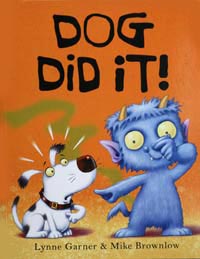
For the commissioning editor I have to try and produce a story that is often character led. So I need a strong character that has to overcome a conflict or one that 'grows.' This means I have to have a plot with a strong start, an interesting middle and a satisfying end. Editors often like a lesson to be learnt, even if this is subtle as in my picture book 'Dog Did It' where the message is not to blame others for your own actions.

The marketing department are looking for a book that can be sold globally and will sell year round. This is why some publishers prefer animals as main characters because they can cross most borders. The marketing department also wants a book that will sell well to a parent or grandparent but also someone buying for an institution such as a school or library. Lastly they want a book that has something they can use to help sell the title for example it has a clever twist to the ending as in 'Tadpoles Promise' written by Jeanne Willis and illustrated by Tony Ross.  

A bookseller has similar needs to the marketing department. They want a book they can place on their shelves and sell itself. This is why humour often works well. If the adult who picks up the book smiles as they are reading it they are more likely to buy it. A bookseller not only needs a book that looks good but also one a child will want read to them time and again. 

Although a picture book is aimed a children it is an adult who purchases it. They are not just looking for value for money but also something they won't mind reading 10, 20, 30 or more times.

So next time you pick up a picture book remember it's been written with you in mind, not just the child you'll be reading it to. 


P.S.
I have three new distance learning courses commencing soon via Women On Writing:

Monday, 6 January 2014

A Picture Is Worth A Thousand Words

A friend recently posted a cute animal photo on my Facebook page. As soon as I saw it I just knew I had to use it as a basis for a picture book story. So I grabbed a sheet of A4 paper and divided into 12 sections (I tend to write the traditional 12 double page spreads). I started to plot my story, which started well. However when I reached the last page I stalled. I had the image in my minds eye, I knew what action was taking place but I just couldn't put it into words. I decided to put the story to one side and allow my subconscious solve the issue for me. However a week or so went by and I was still stuck. Suddenly it hit me. The page didn't need words, the picture could show the reader what I wanted them to know.

I'm not the only author to let the picture tell the story. In the hands of the right illustrator the story can be told successfully without a single word on the page. For example in one of my favourite pictures books The Big Bad Mole's Coming! written by Martin Waddell and illustrated by John Bendall-Brunello there are two pages that contain no words (part of one page below). The action needs no words, I can tell exactly how the animals are feeling from their body language.


Another book that uses this device is Knight Time written by Jane Clarke and illustrated by Jane Massey. The page is a fold out page which opens to reveal a second page with text. Jane informs me the idea was that as the reader turned the page they would feel they were entering the forest where Little Knight and Little Dragon are lost. As you can see from the page below you don't need words to feel the tingle run up your spine and to start to worry about the main characters.


So to all those picture book writers out there. If you're working on a new picture book story and stall ask yourself "can a picture paint the words I need?" If the answer is yes then don't be afraid to allow the illustrations to tell the story for you.

Lynne Garner
www.lynnegarner.com

I have the following online classes with WOW starting soon:

Wednesday, 9 October 2013

Writing and Publishing Seasonal Picture eBooks and Apps


A few of years ago I wrote two picture book stories 'Where It's Always Winter' and 'The Perfect Christmas Tree.' As the titles suggest they both have a festive or seasonal link. Once I'd completed them I sent to various publishers who I believed (because I'd researched their previously published titles) might be interested in them. Again and again they were rejected, which is something you sort of get used to as a professional writer. However a couple of the publishers didn't send me the standard rejection letter. They told me they'd enjoyed the stories but were withdrawing from seasonal books so weren't in a position to take.

This is where my journey into becoming a publisher started. MadMoment Media Ltd was set up and with a very limited budget we had these two picture stories (plus a few others I'd received good feedback on) into apps for the iPhone and iPad. This meant a steep learning curve and a fair few hours spent in a recording studio, as yours truly narrated them.  By the end of 2010 they were ready and uploaded onto the iTunes store. A few months later we converted all of the stories into picture eBooks and uploaded onto Amazon (Amazon UKAmazon US). Our non-seasonal stories sell a few copies all year round. However although 'Where It's Always Winter' and 'The Perfect Christmas Tree' are seasonal we sell as many if not more of them than our non-seasonal titles.

Now you may be wondering why I'm sharing this with you. Well I wanted to demonstrate that just because a large publishing house doesn't see the point of selling seasonal picture books it doesn't mean there isn't a market for them. So if you have a book that's received good feedback but isn't marketable all year round why not give it a go yourself. It's worked for me it could work for you.

Lynne Garner 

I also write for:
The Picture Book Den - all things picture book
Authors Electric - covers digital self-publishing
Awfully Big Blogging Adventure - subjects connected with writing
The Hedgehog Shed - concerned with hedgehog rescue
The Craft Ark - craft how-to blog

My online classes with WOW starting January 2014:

Monday, 1 July 2013

Plotting a Picture Book


It doesn’t matter if you're writing a 70,000-word novel or a 600-word picture book, creating an interesting story is simply a task of asking yourself some questions. Perhaps the most helpful source for what to ask yourself was penned by Rudyard Kipling (30th December 1865 – 18th January 1936),

“I keep six honest serving-men
(They taught me all I knew);
Their names are What and Why and When
And How and Where and Who.”

The four lines above have helped me on many an occasion to solve plotting issues. So what follows is how I use the above to help me construct a story.

Who?
The who is obviously your main character or characters. Unlike adult fiction keep your character numbers small. So it is easier for a child to follow the story.


What?

For a picture book writer there are two what’s to think about. Firstly what is your character? Are they animal, human, mythical create (fairy, wizard, witch etc.) or inanimate object. However many will tell you to keep away from these. Yet Disney still appears to create characters from cars, toys, gnomes etc. that children love. The second what is what happen or perhaps what is your theme? For example the theme for my story ‘A Book For Bramble’ is loneliness and missing a friend. 

Why?
Why is linked into the what, so you ask yourself what happens and why. For example in my book ‘The Best Jumper’ the what happens is my character Spindle the mouse has a jumper that appears to be shrinking however the why it is shrinking is because he is growing, something all children will be able to relate to.

When?
In picture book this is perhaps one of the less important questions. Novels for any age tend to be anchored in a time period. However many picture books are timeless. That is to say when reading them they could be set in any time period. A book about fairies inhabiting a different world could be now or it could be 100 years ago, there is no real relation to ‘our’ time.

Where?
Many picture books are set within their own world as in my book ‘Dog Did It’ which is a mythical world populated by trolls or in a world that sits along side our own. For example in my book ‘A Book For Bramble’ the place it is taking place could be almost anywhere in the world where a mouse lives in a hole under a hedge. As the author I see Teasel and his family living in the English countryside however he would be just at home in many countries in Europe or even in some parts of the US.

How?
This is quite a big question. However I normally use it to answer the question of how my character overcomes the problem I have given them to resolve. If you are a reader of picture books (something I would urge you to do as often as you can) you will notice the how to overcome the problem is not just used once but at least three times to give layers to your plotting.

I’m hoping you can now see how you can use these questions to help you plot your story and create one children will love and adult will be willing to read time and time again.   


I also write for: Electric AuthorsThe Hedgehog Shed and The Picture Book Den

P.S.
I have three new distance learning courses commencing soon via Women On Writing:

Wednesday, 19 June 2013

Five Fab Tips for Picture Book Writing


If writing a picture book is something you'd like to try then take a look at the following tips which will hopefully help you on your way.
 
One:
As you write try to think visually. Attempt to ensure every page can be illustrated with a different scene or picture. This will allow the illustrator to 'play' with your words and create a book that is visually pleasing as well as exciting to read.

Two:
Break your story down into sections and ensure you have a strong start, middle and end. If your character doesn't go on a journey (physical or emotional) why will the reader want to turn to the next page?

Three:
A picture book is a mixture of words and images. So you don't have to include great chunks of description. If it's important your character looks a certain way or they are carrying something then add notes for the illustrator. As the saying goes a picture can say a thousand words. So let the pictures tell half the story whilst your words tell the other half. 

Four:
Picture books are written to be read out aloud. So when it comes to editing do just this. Stand up and read your words out. Then edit as needed.

Five:
If you want to get your book published remember publishers want to sell worldwide. So you have to think globally. For example in my first picture book (A Book For Bramble) I'd mentioned Guy Fawkes Night. Now every child in the UK knows what this celebration is but children from other parts of the world will not. I therefore had to find an alternate celebration. So thinking globally will make your book more viable to a publisher.

I hope these tips have helped. Now find some paper and a pen and get writing!  


P.S.
I have three new distance learning courses commencing in September via Women On Writing:

Wednesday, 11 January 2012

Why Do We Love Them?

One way or another there has always been a dog in my life. Each has had their own unique traits and habits, which have often made me wonder why I love them. Take for example my first dog Mitzi, she was:
  • Extremely fussy about her food
  • If she decided she'd walked enough that was it, she went no further


And yes this is me with Mitzi

Then there was Sally who would only sleep if I rested my hand on her back. This meant each night I fell to sleep with a hand slowly going numb.


Sally

After Sally came our yellow ball of fluff Bonny who:
  • Hid chewed, sticky 'treasures' under my duvet
  • Stole sweets and hid them behind the settee
  • Emptied bins when she became annoyed with us (normally when we went shopping)


Bonny

Then there was Jodi who:
  • Played lets jump through the banisters and land on heads
  • Dragged plants (roots and all) in from the garden through the dog flap
  • Buried clean (they had to be clean) knickers, socks and bras in the back garden
  • Jumped into any car with an open door expecting to be taken for a drive


Jodi

Then came Tasha (out current canine friend) who:
  • Steals socks, even taking them from the washing machine
  • Takes all the space on the settee
  • Chases anything that runs
  • Believes every ball in the world is hers, even acquiring whilst still being played with
  • Has 'entitlements' and unsutbly tells you when they are due


Tasha

However there are also habits they have shared including:
  • Leaving footprints on a newly cleaned floor
  • Shaking and splattering mud up clean walls
  • Creating unsavoury odours

So why do we love them? The answer is simple. They are family and whatever they do they get under your skin. And as a writer I have the added bonus that they feed my writing, they are my muse. Take for example my picture eBook Captain and Nugget (available from Amazon UK and Amazon US). Many of the things my canines friends have done appear in this story and without them I'd never have been able to write it.

So I was wondering what has your canine friend done to make you question why you love them?

P.S. If you'd like to purchase a copy of Captain and Nugget either follow the links about or click on the relevant flag.